


Page 968 - Proceedings Collega2023
P. 968
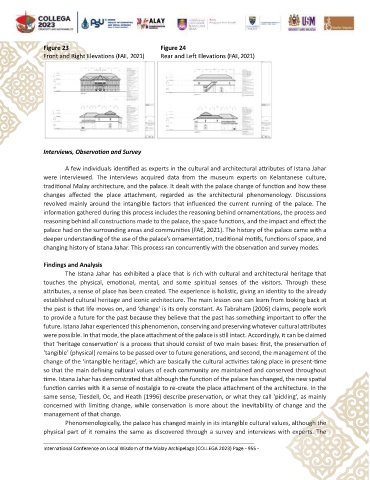
Figure 23                                                             Figure 24
               Front and Right Elevations (FAE,  2021)              Rear and Left Elevations (FAE, 2021)


               Interviews, Observation and Survey

                       A few individuals identified as experts in the cultural and architectural attributes of Istana Jahar
               were  interviewed.  The  interviews  acquired  data  from  the  museum  experts  on  Kelantanese  culture,
               traditional Malay architecture, and the palace. It dealt with the palace change of function and how these
               changes  affected  the  place  attachment,  regarded  as  the  architectural  phenomenology.  Discussions
               revolved  mainly  around the  intangible  factors  that  influenced  the  current  running  of the  palace. The
               information gathered during this process includes the reasoning behind ornamentations, the process and
               reasoning behind all constructions made to the palace, the space functions, and the impact and effect the
               palace had on the surrounding areas and communities (FAE, 2021). The history of the palace came with a
               deeper understanding of the use of the palace’s ornamentation, traditional motifs, functions of space, and
               changing history of Istana Jahar. This process ran concurrently with the observation and survey modes.


               Findings and Analysis
                       The Istana Jahar has exhibited a place that is rich with cultural and architectural heritage that

               touches  the  physical,  emotional,  mental,  and  some  spiritual  senses  of  the  visitors.  Through  these
               attributes, a sense of place has been created. The experience is holistic, giving an identity to the already
               established cultural heritage and iconic architecture. The main lesson one can learn from looking back at
               the past is that life moves on, and ‘change’ is its only constant. As Tabraham (2006) claims, people work
               to provide a future for the past because they believe that the past has something important to offer the
               future. Istana Jahar experienced this phenomenon, conserving and preserving whatever cultural attributes
               were possible. In that mode, the place attachment of the palace is still intact. Accordingly, it can be claimed
               that ‘heritage conservation’ is a process that should consist of two main bases: first, the preservation of
               ‘tangible’ (physical) remains to be passed over to future generations, and second, the management of the
               change of the ‘intangible heritage’, which are basically the cultural activities taking place in present-time
               so that the main defining cultural values of each community are maintained and conserved throughout
               time. Istana Jahar has demonstrated that although the function of the palace has changed, the new spatial
               function carries with it a sense of nostalgia to re-create the place attachment of the architecture. In the
               same sense, Tiesdell, Oc, and Heath (1996) describe preservation, or what they call ‘pickling’, as mainly
               concerned with limiting change, while conservation is more about the inevitability of change and the
               management of that change.
                        Phenomenologically, the palace has changed mainly in its intangible cultural values, although the
               physical part of it remains the same as discovered through a survey and interviews with experts. The


               International Conference on Local Wisdom of the Malay Archipelago (COLLEGA 2023) Page - 955 -

