


Page 544 - Proceedings Collega2023
P. 544
Findings
                       Present the three images recorded from this Niah cave and label them as image 1, image
               2, image 3, etc. Then explain the characteristics of each one and identify each one.
                        Significant physical characteristics such as four-legged animals, anatomical limbs such as
               head horns and even chicken fronds are the main icons identified. An image of an animal listed
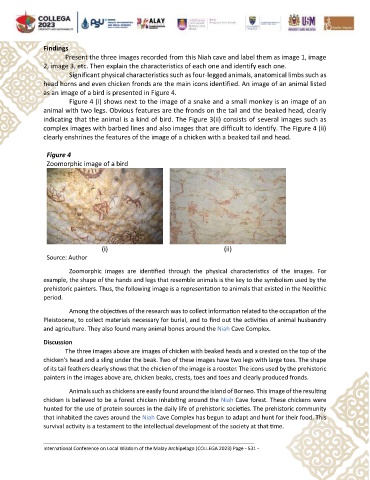
               as an image of a bird is presented in Figure 4.
                        Figure 4 (i) shows next to the image of a snake and a small monkey is an image of an
               animal with two legs. Obvious features are the fronds on the tail and the beaked head, clearly
               indicating that the animal is a kind of bird. The Figure 3(ii) consists of several images such as
               complex images with barbed lines and also images that are difficult to identify. The Figure 4 (ii)
               clearly enshrines the features of the image of a chicken with a beaked tail and head.

                Figure 4
                Zoomorphic image of a bird


                                   (i)                                     (ii)
                Source: Author

                        Zoomorphic  images  are  identified  through  the  physical  characteristics  of  the  images.  For
               example, the shape of the hands and legs that resemble animals is the key to the symbolism used by the
               prehistoric painters. Thus, the following image is a representation to animals that existed in the Neolithic
               period.

                        Among the objectives of the research was to collect information related to the occupation of the
               Pleistocene, to collect materials necessary for burial, and to find out the activities of animal husbandry
               and agriculture. They also found many animal bones around the Niah Cave Complex.

               Discussion
                       The three images above are images of chicken with beaked heads and a crested on the top of the
               chicken's head and a sling under the beak. Two of these images have two legs with large toes. The shape
               of its tail feathers clearly shows that the chicken of the image is a rooster. The icons used by the prehistoric
               painters in the images above are, chicken beaks, crests, toes and toes and clearly produced fronds.

                        Animals such as chickens are easily found around the island of Borneo. This image of the resulting
               chicken is believed to be a forest chicken inhabiting around the Niah Cave forest. These chickens were
               hunted for the use of protein sources in the daily life of prehistoric societies. The prehistoric community
               that inhabited the caves around the Niah Cave Complex has begun to adapt and hunt for their food. This
               survival activity is a testament to the intellectual development of the society at that time.


               International Conference on Local Wisdom of the Malay Archipelago (COLLEGA 2023) Page - 531 -

