


Page 962 - Proceedings Collega2023
P. 962
of place attachment to the visible conditions of the architecture. However, the historical background of
               the palace was seriously considered since the architectural change highlighted the characteristics that are
               demonstrable. These attributes are both tangible and intangible, and the focus is on the culture, mainly
               the customs, traditions, and rituals that have an impact on the architecture and the changes that took
               place in the palace.
               Historical Background


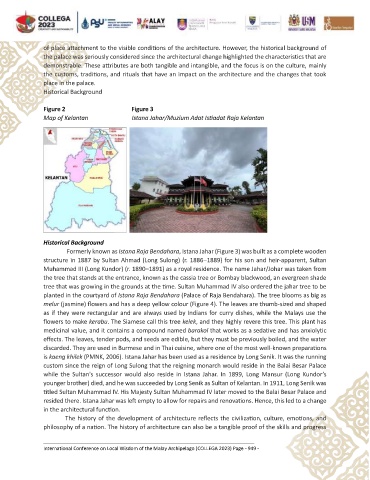
               Figure 2                                            Figure 3
               Map of Kelantan                             Istana Jahar/Muzium Adat Istiadat Raja Kelantan


               Historical Background
                        Formerly known as Istana Raja Bendahara, Istana Jahar (Figure 3) was built as a complete wooden
               structure in 1887 by Sultan Ahmad (Long Sulong) (r. 1886–1889) for his son and heir-apparent, Sultan
               Muhammad III (Long Kundor) (r. 1890–1891) as a royal residence. The name Jahar/Johar was taken from
               the tree that stands at the entrance, known as the cassia tree or Bombay blackwood, an evergreen shade
               tree that was growing in the grounds at the time. Sultan Muhammad IV also ordered the jahar tree to be
               planted in the courtyard of Istana Raja Bendahara (Palace of Raja Bendahara). The tree blooms as big as
               melur (jasmine) flowers and has a deep yellow colour (Figure 4). The leaves are thumb-sized and shaped
               as if they were rectangular and are always used by Indians for curry dishes, while the Malays use the
               flowers to make kerabu. The Siamese call this tree kelek, and they highly revere this tree. This plant has
               medicinal value, and it contains a compound named barakol that works as a sedative and has anxiolytic
               effects. The leaves, tender pods, and seeds are edible, but they must be previously boiled, and the water
               discarded. They are used in Burmese and in Thai cuisine, where one of the most well-known preparations
               is kaeng khilek (PMNK, 2006). Istana Jahar has been used as a residence by Long Senik. It was the running
               custom since the reign of Long Sulong that the reigning monarch would reside in the Balai Besar Palace
               while  the  Sultan's  successor  would  also  reside  in  Istana  Jahar.  In  1899,  Long  Mansur  (Long  Kundor’s
               younger brother) died, and he was succeeded by Long Senik as Sultan of Kelantan. In 1911, Long Senik was
               titled Sultan Muhammad IV. His Majesty Sultan Muhammad IV later moved to the Balai Besar Palace and
               resided there. Istana Jahar was left empty to allow for repairs and renovations. Hence, this led to a change
               in the architectural function.
                       The history of the development of architecture reflects the civilization, culture, emotions, and

               philosophy of a nation. The history of architecture can also be a tangible proof of the skills and progress


               International Conference on Local Wisdom of the Malay Archipelago (COLLEGA 2023) Page - 949 -

